
Federico Castelló
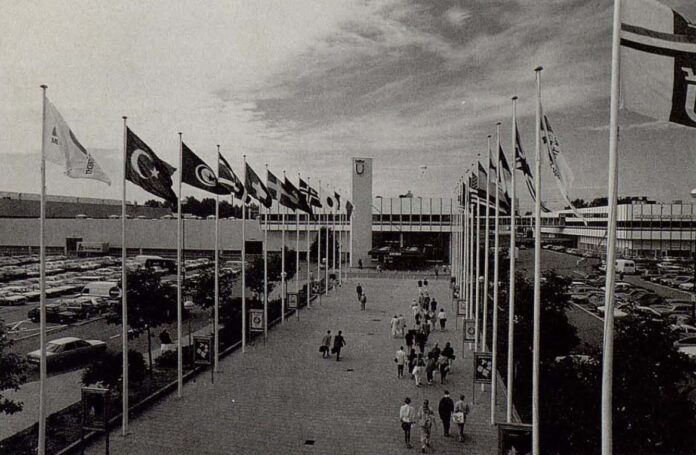
There is a question that can be put to any technical director, production manager or purchasing officer in the Spanish or Latin American poultry industry: where did you first see the technology you now consider indispensable in your operation? The answer, with surprising regularity, includes a trade fair in Utrecht, the Netherlands.
This is no coincidence. Since 1974, VIV Europe has served as the world’s largest commercially applied innovation laboratory for the poultry sector. What appears there in beta form or as a world premiere ends up in farms, hatcheries and poultry slaughterhouses around the globe in the years that follow. Let us review twenty of those technologies that, edition after edition, changed the rules of the game.
1. The computerised egg grader (1982–1986)
In the 1980s, one of the most striking novelties at VIV was an egg grader incorporating a “mini-computer” to control the entire process. It seemed like science fiction. By 1986, Moba was already presenting its 6,000 grader with an integral electronic control system. In 1994, the Omnia 330, capable of processing 150,000 eggs per hour, won the gold innovation medal. The journey from manual grading to today’s systems — which detect hairline cracks by ultrasound, control weight to sub-gram precision and label each egg with full traceability — passed entirely through the halls of Utrecht.
2. Multi-tier laying batteries and manure pre-drying (1986–1990)
In 1986, the trend at Utrecht was an increase in the number of tiers in laying hen batteries to offset the larger floor space per bird required under EU legislation. By 1990, the next step was on show: the first manure drying systems using conveyor belts with airflow, reducing moisture content to 40–50% before weekly removal. Hygiene, manure management and animal welfare all converged in that design. Today, no large-scale industrial laying facility in Europe dispenses with this system.
3. Nipple drinkers for broilers (1988)
At VIV 1988, we observed for the first time the growing trend towards cup and nipple drinkers as a replacement for the classic suspended bell drinkers in litter-floor houses. The advantages were clear: less water wastage, lower litter moisture and fewer respiratory problems. Adoption was gradual but irreversible. Today the nipple drinker is the standard in virtually all industrial broiler production worldwide.
4. The first farm management computers (1990)
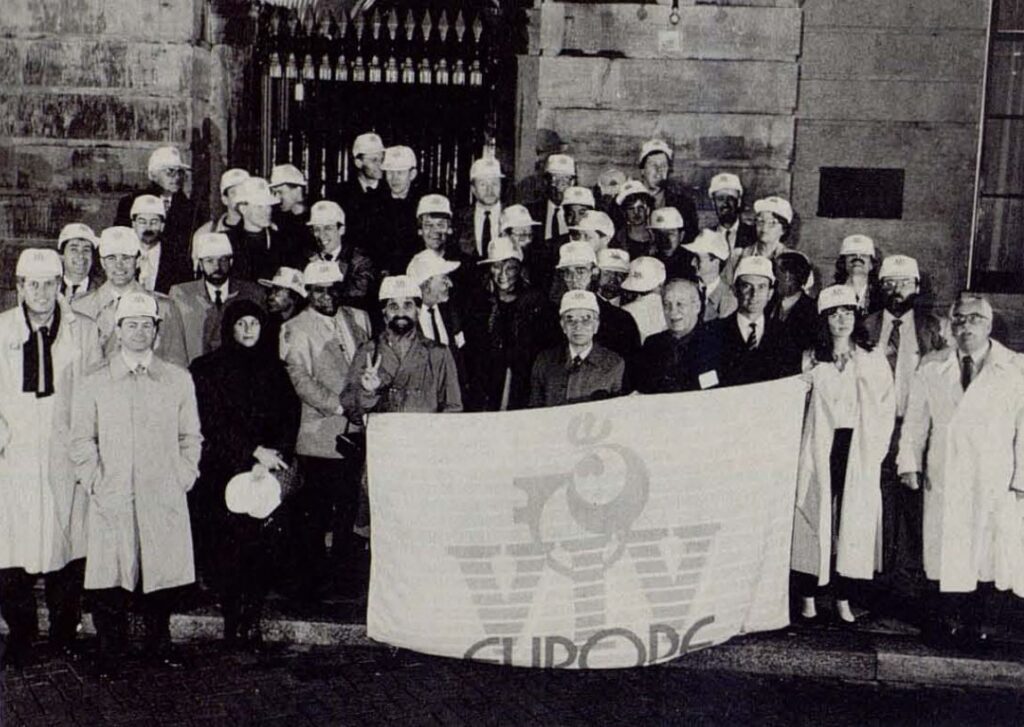
VIV ’90 was the first edition in which computers visibly pervaded every area of poultry farming: control of incubator parameters, monitoring of broiler weights and feed conversion ratios, environmental management of poultry houses with electronic regulation of temperature, humidity and ventilation. What was then a novelty for attendees would, over the following two decades, become the foundation of precision poultry farming.
5. Mechanised broiler catching (1988–1994)
At VIV 1988, a Dutch broiler loader was exhibited for the first time, picking birds up from the floor by direct suction and transferring them into transport crates in palletised form. By 1994, several companies were already competing with mechanised broiler catching systems based on rubber fingers or belts, reducing animal stress and the labour requirements of one of the most demanding operations in the production process. The robotisation of broiler catching — which today achieves processing speeds unimaginable in the 1980s — had its first chapter in Utrecht.
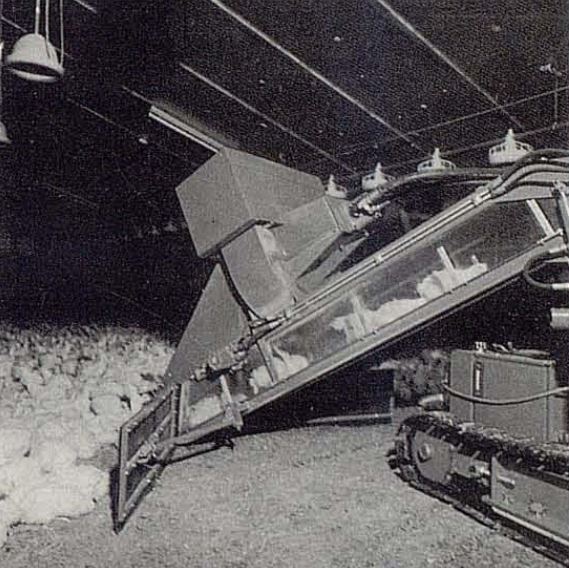
At VIV EUROPE 1988, an automatic suction-based broiler catching system was presented.
6. Remote control of incubators (1994)
At VIV ’94, Petersime presented the Vision and Visionlink systems, enabling computerised remote control of incubators: remote monitoring, parameter logging and automatic alarms. It was the beginning of what we now call connectivity in the hatchery. At that same edition, PAS Reform — still one of the world’s reference companies in 2026 — was already outlining its goals of maximum hygiene, energy savings and minimal labour in the incubation process. A programme that, decades later, remains the industry’s guiding principle.
7. In ovo vaccination (2001)
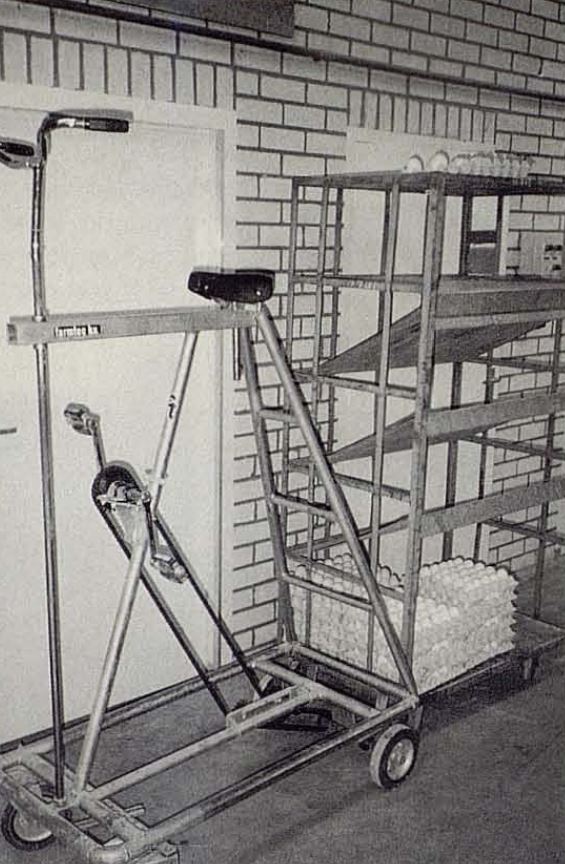
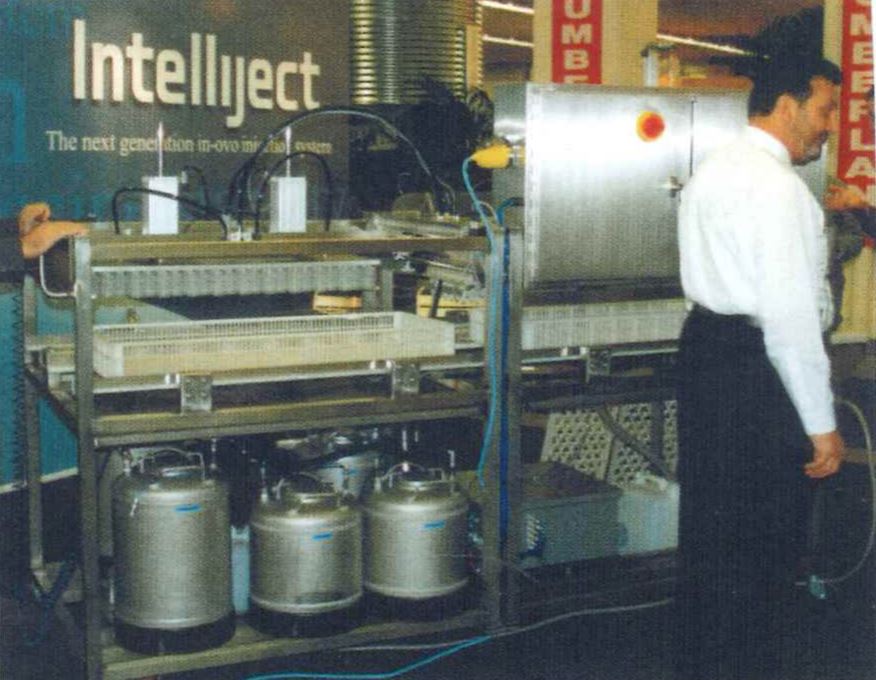
VIV 2001 witnessed the presentation of two competing machines for vaccinating the embryo through the incubating egg: the Invoject from Embrex and the American Intelliject. In ovo vaccination — which delivers the vaccine directly to the embryo without handling the newly hatched chick — is today standard practice in medium-to-large broiler integrations worldwide. Its first appearance at a European trade fair was in Utrecht.
8. Aviaries for laying hens (2001–2010)
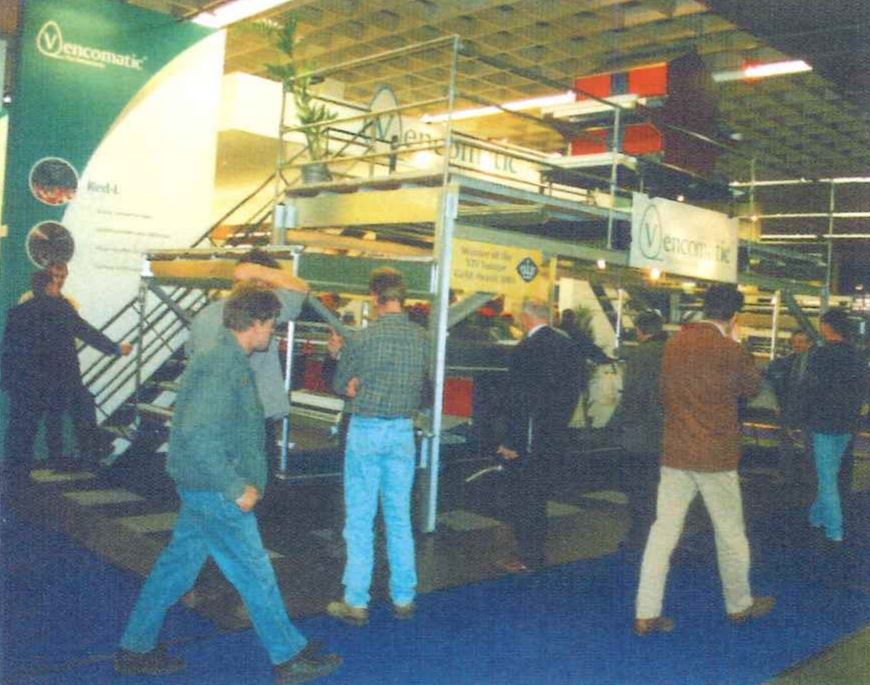
When the first alternative housing systems for laying hens based on the aviaries concept began to appear at VIV 2001, most Spanish operators regarded them as a curiosity confined to Nordic countries. EU animal welfare legislation forced a reassessment of that position. At VIV 2010, with the ban on conventional battery cages just two years away, the aviary sections were the most heavily visited areas of the fair. Vencomatic, Big Dutchman, Farmer Automatic: all were competing there with their solutions. What Utrecht announced in 2001 became mandatory across Europe in 2012.
9. Single-stage incubators and circadian control (2010)
VIV 2010 marked the beginning of the era of circadian incubation, with PAS Reform presenting for the first time at the fair its concept of “biologically rhythmic incubation” to improve not only machine performance but also the behaviour and vitality of the chick during subsequent rearing. Hatchtech simultaneously exhibited its single-stage incubators featuring water micronisation, CO₂ control and climate-controlled chick transport. The competition between these technical models in the Utrecht halls has defined the technological direction of hatcheries worldwide over the past decade and a half.
10. On-farm hatching (2014–2018)
One of the most compelling debates in poultry farming in recent years is that of so-called “on-farm hatching”: transferring embryonated eggs to the rearing house on day 18 of incubation so that chicks hatch directly on the litter, gain immediate access to feed and water, and avoid the stress of post-hatch transport. At VIV 2014, Vencomatic presented the X-Treck system as a competing concept to HatchTech. Also in 2014, we were able to see the practical application of the concept of feeding chicks from minute 1 after hatching, with HatchTech hatcher trays incorporating feed and water. In 2018, the Belgian company NestBorn exhibited its own system for “seeding” eggs onto the litter using an automated vehicle after 18 days of incubation. Today, several commercial European facilities operate on this principle. Utrecht was the stage for its world debut.
11. LED lighting for poultry houses (2014)
Before LED became the universal standard, VIV 2014 was the first major poultry trade fair to bring together a significant number of companies competing exclusively with LED lighting systems for poultry houses, presenting arguments based on energy savings, spectral tuning and production control. Agrilamp, Agrilight, Hato: the names were already familiar in our sector, but Utrecht was the showcase that gave them global credibility.
12. Autonomous robots on farms (2018)
At VIV 2018, the first autonomous robots for poultry farming with genuine productive functions were exhibited — not as laboratory concepts but as products available for sale: the “Spoutnic” robot from Tibot to reduce floor eggs in breeder houses, and the “Chicken Boy” from Faromatics for automatic broiler monitoring in the poultry house. The robotisation of the poultry farm, which today is advancing at cruising speed, had its first large-scale public appearance in Utrecht in 2018.
13. Computerised environmental control with video cameras (2010)
At VIV 2010, Fancom presented the eYeNamic system: a video camera connected to farm management software (FarmManager FOR) that provided real-time remote visibility of what was happening inside broiler houses. It was the embryo of continuous monitoring based on machine vision, which today combines cameras, animal behaviour algorithms and cloud-based data platforms.
14. Automatic wing-feather sexing of chicks (2006)
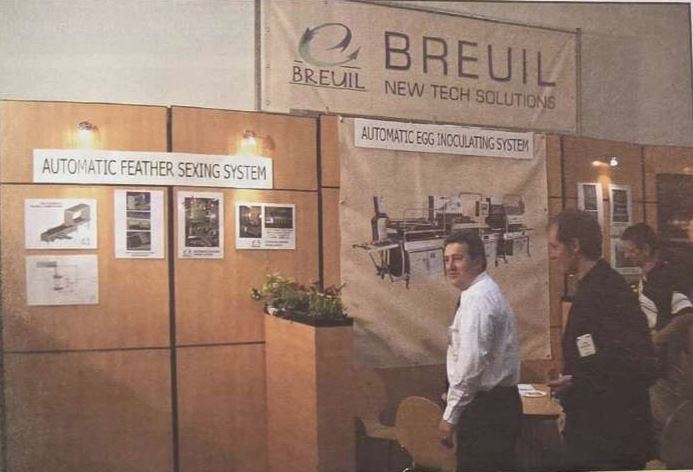
At VIV 2006, the French company Breuil presented the first automatic wing-feather chick sexing machine on the market, capable of determining sex using software that measured feather length and arrangement with an error rate of 3–5%. Automatic chick sexing — today the subject of a technological race encompassing in ovo methods based on spectroscopy and embryo vocalisation analysis — has its first documented commercial appearance at that Utrecht stand.
15. Cloud-based farm management software (2018)
In 2018, several hard-to-categorise stands attracted attention in Utrecht: Farmcloud, FarmResult, PoultryPlan, Ovo Sision with Qwinsoft. All offered essentially the same proposition with different nuances: analysis of productive, environmental and economic variables stored in the cloud, accessible via smartphone or tablet by the producer, the veterinarian or the integrator, at any time and from any device. Data-driven poultry farming — debated today in every sector forum — did not begin at a scientific congress. It began at a trade fair in Utrecht.
16. Floor feeders for poultry with sex separation (1994–2010)
The adaptation of feeding systems for heavy breeders with physical separation of males and females — one of the perennial management challenges on breeder farms — found its first commercial-scale solutions in Utrecht. The successive advances in hoppers, chain distribution systems, height-adjustable mechanisms and sex-specific intake control that have transformed breeder management over the past thirty years invariably passed through the VIV halls before reaching farms.
17. Controlled atmosphere stunning in slaughterhouses (2001–2018)
The CAS (Controlled Atmosphere Stunning) system from Stork PMT for stunning broilers using a nitrogen and CO₂ atmosphere was exhibited in Utrecht across successive editions as the animal welfare benchmark for poultry slaughter. Gas stunning is today the preferred method among the leading European integrations and the approach required by welfare regulations in the continent’s most modern slaughterhouses.
18. On-farm feed manufacturing (1988)
From the earliest editions of VIV, programmable mini feed mills were already on show, capable of automatically aspirating, mixing and distributing ingredients in precise proportions. The concept of on-farm feed manufacturing — which found its first commercial traction in Spain during those years — had its main showcase in Utrecht.
19. Evaporative cooling systems for poultry houses (1994–2018)
Munters, the Swedish company, has been a constant presence in the VIV Europe halls for decades. Its evaporative cooling pads for cross-ventilated or tunnel-ventilated houses — today basic infrastructure in any poultry farm located in a warm climate — found their global dissemination platform in Utrecht.
20. Biosensors and data platforms for continuous monitoring (2018–2026)
The last frontier visible at Utrecht 2018 — and one that will arrive in mature form in 2026 — is the integration of biosensors, machine vision cameras, data intelligence platforms and predictive algorithms for continuous farm management. What in 2018 were attractive prototypes on the stands of young companies is, in 2026, technology in commercial deployment. And what we will see for the first time at Utrecht in 2026 in the halls of the Jaarbeurs, no one can yet know. But one thing is certain: if it is going to change poultry farming in the years ahead, it will probably already be there, in Utrecht, from 2 to 4 June.
There is no reason to miss it.
Federico Castelló
Founder of NeXusAvicultura.com
🔗 Free registration for professionals at: europe.viv.net
For further information:
-. Fair VIV EUROPE 2026
-. International events calendar: https://NeXusAvicultura.com/Calendario/